
Blog
Insights on financial guidance and business strategy

The Director's Guide to Business Continuity Planning
Most continuity plans exist only in the director's head, which means they don't really exist at all. Here's how to map the risks that could stop the business, calculate real financial runway, and build a response before a disruption forces the question.

What Happens to Your Business Debt If the Company Fails
Most directors assume company debt dies with the company. Personal guarantees, unpaid superannuation, PAYG withholding, and insolvent trading say otherwise. Here's exactly where limited liability ends and personal exposure begins.

How to Make Your Business Attractive to a Buyer Before You're Ready to Sell
Most owners start preparing for a sale six months before listing, which is far too late. Here's what buyers are actually pricing, owner dependency, revenue quality, client concentration, and the five-step framework to fix them years ahead of time.
The Moment a Business Stops Being a Job and Becomes a Company
Most business owners can't tell you the moment their business stopped needing them, because it hasn't happened yet. Here's the owner-dependency test that separates a company from a job with better margins, and the three-stage shift to make it real.

What a Director's Week Actually Looks Like at $1M+ Revenue
Most directors at $1M+ revenue are still running their week like they did at $300k, buried in operations that should have been delegated. Here's the four-block framework for what a director's week should actually look like, and what it's costing you if it doesn't.
Why Your Accountant and Your Business Adviser Are Not the Same Thing
Most business owners assume their accountant is also their strategic adviser. They're not the same role. Here's where compliance ends and strategy begins, and why the gap between them quietly costs established businesses the most.
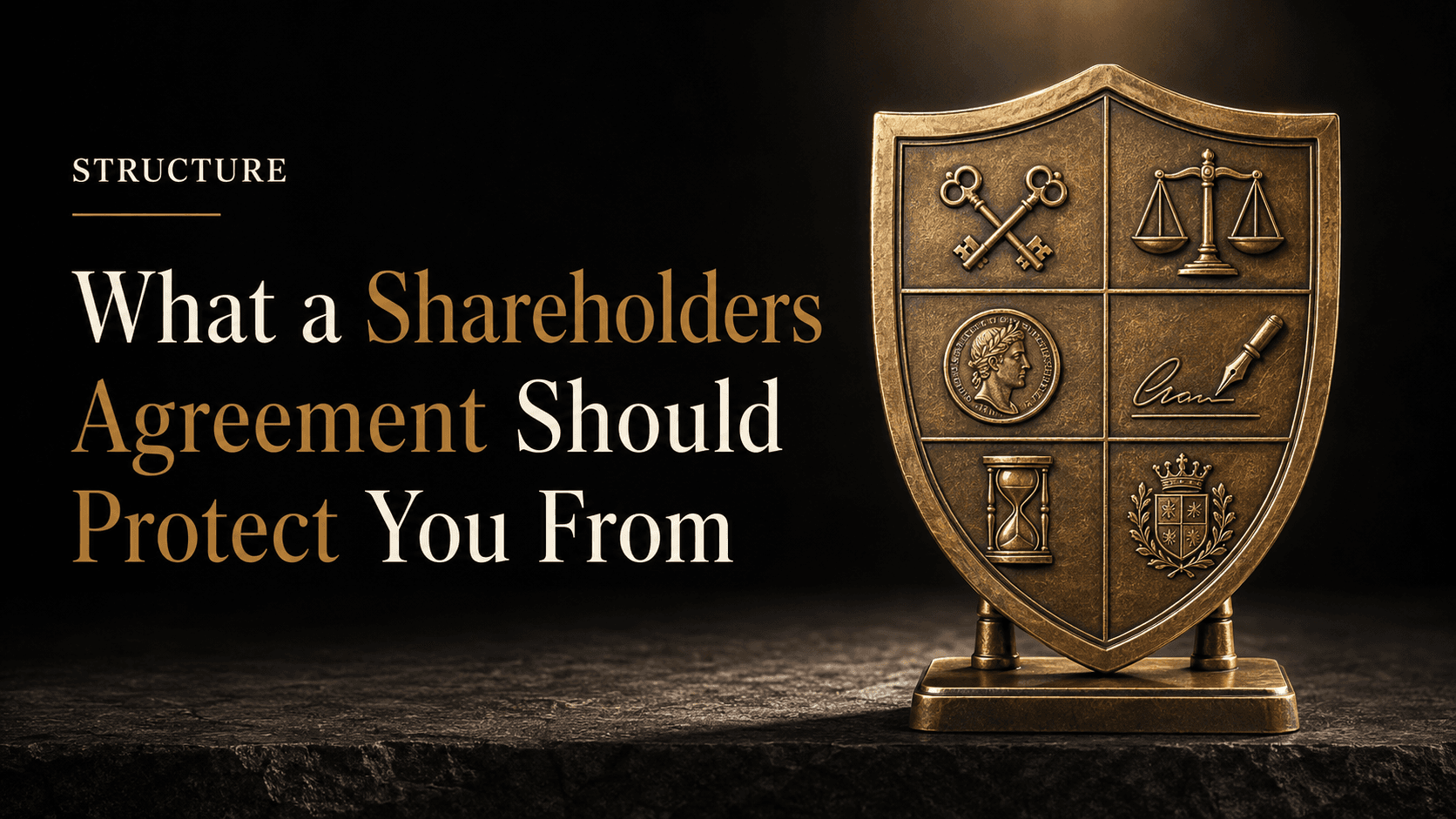
What a Shareholders Agreement Should Actually Protect You From
Most shareholders agreements are drafted reactively and don't address the scenarios that actually destroy business relationships. Here's what a shareholders agreement should cover, and the six situations it must specifically protect you from.

How to Value Your Own Business Without Hiring a Broker
Most business owners have no idea what their business is worth. Here's the framework directors use to calculate a directionally accurate enterprise value, adjust for the factors that move the multiple, and use the number to make better governance decisions.

What Directors Should Know Before Taking on a Business Partner
Most business partnership problems aren't created by bad people. They're created by good people making undocumented assumptions. Here's what directors need to know, document, and agree before the handshake is exchanged.

How to Make Your Business Attractive to a Buyer Before You're Ready to Sell
The worst time to make your business attractive to a buyer is when you've decided to sell. Here's the 36-month framework directors use to build the value drivers that command a premium, whether or not a sale ever happens.
How Directors Use Their Accountant, Lawyer and Adviser Differently
Most established business owners have an accountant, a lawyer, and occasionally an adviser. Few understand what each is actually for, or why calling the wrong one for the wrong question produces expensive outcomes. Here's how directors structure and use all three.
What to Do When a Key Supplier Fails You
A key supplier failure is not a question of if. It's a question of when, and whether you have a plan. Here's how directors manage supplier risk before it becomes a crisis, and how to respond when it does.

How to Negotiate With a Supplier Without Destroying the Relationship
Most business owners avoid supplier negotiations to protect the relationship. Good negotiations don't damage relationships. Badly handled ones do. Here's the director-level framework for negotiating better terms without losing the supplier relationships your business depends on.
How to Manage Your Banking Relationship as a Director
Most business owners only call the bank when they need something. Directors manage the relationship before the need arises. Here's the framework for building a banking relationship that gives you better terms, faster decisions, and more options when it matters.
How to Prepare Your Business Before Approaching a Bank for Finance
Most business owners approach a bank unprepared and get worse terms or no outcome. Here's how directors prepare the financial picture, the facility case, and the personal position before the bank conversation starts.

What Happens to Your Business If Something Happens to You
Most directors have thought about what happens to the business if they're suddenly unavailable. Few have done anything about it. Here's the governance preparation that protects the business, the family, and everyone who depends on it.
The Pricing Conversation Directors Keep Avoiding
The pricing conversation most directors avoid is costing them more than having it would. Here's how to raise prices with existing clients, state fees confidently to new prospects, and run the governance review that tells you what the price should actually be.

How to Qualify a Prospect Before You Waste Three Meetings
Most service businesses invest in prospects that were never going to convert. Here's the four-question framework directors use to qualify a prospect before the proposal is written and the third meeting is booked.
Why Referral-Only Growth Eventually Hits a Wall
Referrals are the highest-quality leads a business can get. They're also a finite strategy. Here's why referral-only growth hits a structural ceiling, what causes it, and how established directors build on top of it rather than waiting for it to fix itself.
How to Exit a Bad Client Without Burning the Relationship
Most directors know a client needs to go. Most delay it for months. Here's the framework for exiting a bad client cleanly, professionally, and without the collateral damage you're trying to avoid.

Why Most Business Advisers Give You Information Instead of Decisions
Most advisers are paid to inform. The decision, and the accountability for it, stays with you. Here's why that model fails established directors, how to tell the difference before you engage, and what director-level advisory actually looks like.
The Moment a Business Stops Being a Job and Starts Being a Company
Legally, most businesses incorporate within a year. Operationally, most never complete the transition. Here's what it actually takes for a business to stop depending on its founder and start functioning as a company with independent value.

What a Director's Day Actually Looks Like at $1M+ Revenue
Crossing $1M in revenue doesn't make the business easier. It makes the governance harder. Here's what a director's day actually looks like at this scale, and why the structure of the day determines whether the business grows or just gets bigger.

Why Revenue Milestones Feel Good but Mean Nothing Without Margin
Crossing a revenue milestone feels like progress. It isn't, not without margin. Here's why directors measure margin, not revenue, and how the gap between those two measures determines what the business is actually worth.

When Debt Is a Director Decision and When It's Just Avoidance
Some debt builds a business. Some debt defers the problem of running one. Here's the director-level framework for knowing the difference before the facility is drawn, not after it's due.

The Real Cost of Underpricing a Service Business
Underpricing doesn't feel like a crisis when it's happening. But the damage is compounding every month: margin that can't fund a hire, clients attracted by the wrong signal, enterprise value quietly destroyed. Here's what underpricing is actually costing your service business.
How to Build a Cash Reserve Policy That Protects the Business
Most businesses have a cash balance, not a cash reserve policy. Here is the four-variable framework directors use to set the right reserve target for their specific business, and the five policy components that make it a governance decision rather than a rough intention.

What Is a Director's Loan Account and Why Is It a Problem
Most directors believe incorporation protects them. It protects them from some things. Here are the six most common and most costly misconceptions about director personal liability in Australia, and where the protection actually ends.

What ASIC Actually Expects From a Company Director
Most private company directors think ASIC is someone else's problem. It isn't. Here's what sections 180 to 184 of the Corporations Act actually require, what ASIC is enforcing in 2026, and what every director needs to have documented before something goes wrong.

How to Structure Your Business So the ATO Is Never a Surprise
Most ATO surprises aren't tax problems. They're structure problems. Here's how to build a business where every GST, PAYG, super, and income tax obligation is visible, set aside, and governed before it falls due.
What Directors Need to Know About Superannuation Obligations
Super is not just a payroll obligation. When the company fails to meet its superannuation guarantee, the ATO comes for the director personally. Here's what that liability looks like, how Payday Super changed the rules, and what directors need to govern differently.
Director Penalty Notices Are Back. Here's What Happens If the ATO Knocks
The ATO issued more than 84,000 Director Penalty Notices in 2024-25. That's a 136% increase. Here's what a DPN is, when lockdown liability applies, what Payday Super changes about the risk, and what to do if a notice arrives.
What Is a Director's Loan Account and Why Is Mine a Problem?
If money has ever moved from your company to you personally outside of salary or dividends, it's sitting in a director's loan account. Here's what that means under Division 7A, why the ATO is actively looking at it, and what to do before it becomes a personal tax problem.
How to Read a Profit and Loss Statement as a Business Owner (Not an Accountant)
Most business owners scroll to the bottom of the P&L and check the net profit. That's the least useful number on the page. Here's how to read a profit and loss statement like a director, and what the numbers actually tell you about your business.

Why Profitable Businesses Still Die (And How Directors Prevent It)
If you have to open a spreadsheet to answer a basic question about your own business, that's a governance gap. Here are the five numbers every director should carry in their head, and why most don't.
Stop Hiring to Fix a System Problem
Hiring feels like action when the business is stretched. But if the problem is structural, you're not adding capacity. You're adding payroll to a broken system. Here's how to tell the difference, and what to fix first.

Should You Take a Salary or Dividends? The Director's Tax Decision
Salary or dividends? Most directors answer this with gut feel and an old accountant conversation. Here's the proper framework for modelling the decision against your actual numbers, including the Division 7A risks most owners don't know they're carrying.
How to Price a Service Business for Scale, Not Just for Now
Most service businesses set prices once and never revisit them. Here's the director-level framework for pricing that funds growth, builds margin, and stops the quiet compression that keeps established businesses stuck.

When to Hire Your First Senior Employee vs When to Stay Lean
Hiring a senior person feels like the obvious move when you're stretched. It isn't always the right one. Here's the director-level framework for knowing when to hire, when to stay lean, and what the decision actually costs your business.
What a Director's Weekly Routine Actually Looks Like
Most business owners don't have a weekly routine. They have a weekly reaction. Here's what a director's week actually looks like when governance is treated as the primary function, not an afterthought.

How to Know If Your Business Is Actually Profitable (Or Just Busy)
Revenue looks fine. The team is flat out. So why does the bank account tell a different story? Here's how to tell whether your business is genuinely profitable or just very, very busy.

Why Your Accountant Isn’t Enough
Your accountant handles compliance. That's valuable, and it's not enough. Here's what the governance gap above the tax function is costing your established business every year.

The Difference Between a Business Owner and a Director (And Why It Costs You Money)
Payday Super is law. Quarterly super is gone, and your cash flow, payroll systems, and compliance exposure change with it. Here's what directors need to know before it hits.
The Hidden Stress of Scaling a Business
Scaling a business introduces pressure that is not always visible in financial performance. As complexity increases, leadership, operations, and decision-making become strained. This article explains the hidden stress factors in scaling and how directors manage them through systems, governance, and structured organisational design.
Why Smart Business Owners Still Make Bad Decisions
Intelligence and experience do not prevent poor decisions in business. Bias, urgency, emotional influence, and decision volume degrade judgement at scale regardless of how capable the decision-maker is. This post explains the specific mechanisms behind decision failure in growing businesses and the five systems directors build to replace unstructured intuition with structured, evidence-based decision-making.

Why Successful Businesses Still Feel Chaotic
The most disorienting version of operational chaos is the kind that exists inside a profitable business. Revenue is growing, clients are engaged, and the director feels least in control of all of it. This post explains why successful businesses still feel chaotic, what structural conditions produce that experience, and the five systems that convert reactive operations into controlled ones.
How to Build a Business That Works Without the Owner
Most businesses are built around the owner. Every decision, every escalation, every operational question routes back to the same person. The business functions. It does not scale. This post explains how directors build organisations that run without the owner's daily involvement, what structural systems make that independence possible, and why the shift from doing to designing is the hardest and most important move the owner will make.
The Director’s Guide to Operational Resilience
Operational resilience is not a cultural attribute or a function of having the right people. It is a structural outcome produced by deliberate design. This post is the blueprint — it explains what directors build to create an organisation that maintains performance when conditions change, key people are unavailable, or demand exceeds what was planned for.
The Bottleneck Principle in Business Growth
Every growing business is limited by a bottleneck, and adding activity around it does not increase output. It increases pressure. This post explains the bottleneck principle, how directors identify which constraint is limiting growth, why adding resources rarely fixes it, and the five-stage framework for removing constraints systematically rather than reactively.
How Directors Build Accountability Without Micromanaging
Accountability and micromanagement are not opposites on a spectrum. One is a structural outcome. The other is what happens when the structure is missing. This post explains why micromanagement emerges from systems gaps rather than personality flaws, and how directors build the five systems that enforce accountability through ownership, reporting, and governance without requiring the director to be present for performance to hold.

The Leadership Gap That Appears After Your First 5 Employees
Most businesses encounter a leadership gap once they grow beyond five employees. The informal communication and founder-led decision-making that worked at three people stops working at eight, and the gap between operational complexity and structural readiness produces exactly the confusion, slowdown, and founder dependency the business was growing to escape. This post explains why the gap appears and the five systems directors use to close it before it compounds into something harder to fix.

Why Hiring Too Early Breaks Businesses
Hiring is often the instinctive response to growth pressure. It is also one of the most common ways growing businesses make themselves slower, more expensive, and more founder-dependent simultaneously. This post explains why premature hiring creates dependency rather than capacity and the five structural readiness criteria directors satisfy before any hire is made.

The Cost of the Wrong Hire (And How Directors Avoid It)
A single wrong hire can disrupt operations, damage culture, and reduce profitability. This article explains the true cost of hiring mistakes in established businesses and outlines the governance systems, hiring frameworks, and decision processes directors use to minimise risk and improve hiring outcomes.
How to Know When Your Business Is Ready for Its First Manager
when to hire manager, leadership structure business, scaling team management, operational leadership readiness, founder delegation systems, business management structure, leadership capacity scaling, director leadership framework, business ready for first manager, management hire timing, founder to manager transition, operational readiness management hire, first manager readiness, when to hire manager business, management structure growing business, founder delegation readiness, first management role business, operational ownership transfer, manager role definition business, business management readiness

Why Premium Clients Choose Structure Over Price
Premium clients do not pay more because they can afford to. They pay more because they are buying certainty — the confidence that what they commissioned will be delivered consistently without requiring them to manage the supplier. This post explains what premium clients are actually evaluating when they choose a business, why structure communicates capability faster than any pitch, and the five systems directors build to attract and retain the client segment that pays for value rather than competing on price.

How to Identify Your Most Valuable Clients
Most businesses misidentify their best clients by focusing on revenue. The quietest accounts, the ones that never appear in leadership meetings, are often generating the strongest margins. This post explains how directors identify high-value clients across five dimensions, why revenue ranking and profitability ranking diverge so consistently, and how to use that analysis to build a client portfolio worth scaling.

The Client Red Flag Framework
Some clients damage profit and increase risk long before the issue is visible in monthly reporting. This article gives directors a practical framework to identify client red flags early, protect margins, and prevent operational drag from becoming structural instability.

The 4 Types of Clients Every Business Has
Not all clients contribute equally to business performance. Some drive profitability, others consume resources, and some introduce risk. This article outlines the four types of clients every established business has and explains how directors structure pricing, operations, and governance to manage each segment effectively.
Why Some Clients Destroy Profit (Even When They Pay Well)
Not all high-paying clients are profitable. Some introduce hidden costs through complexity, rework, and management overhead. This article explains how directors identify clients that erode profit and implement systems to protect margin and operational stability.
How to Evaluate Business Opportunities Like a Director
Directors evaluate business opportunities differently from founders and sales teams because they are asking different questions. Not "is this profitable?" but "does this belong in this organisation, at this stage, with the capacity and strategic direction we currently have?" This post explains the mental model behind director-level opportunity evaluation and the five-filter framework that makes it repeatable and consistent across every opportunity the organisation faces.

The Director’s Framework for Strategic Trade-Offs
Every growth decision creates a trade-off. More revenue often means more complexity, risk, or resource strain. This article outlines a director-level framework for making disciplined strategic trade-offs without diluting focus or increasing operational exposure.
When to Raise Prices (And When Not To)
Pricing decisions directly affect profitability, client retention, and operational stability. This article explains when directors raise prices, when they avoid it, and how pricing should be governed through systems, financial visibility, and strategic positioning rather than reactive decision-making.

How Directors Decide Which Opportunities to Ignore
Established businesses are not constrained by lack of opportunity. They are constrained by the absence of discipline in selecting the right ones. This post explains how directors filter opportunities through strategic alignment, capacity, financial exposure, and complexity before committing, and why the organisations with the most focused pipelines are typically the ones that say no most consistently.

The Capacity Ceiling: How to Break Through Your Business Limits
Many businesses reach a stage where growth slows despite strong demand. The organisation has reached its operational capacity ceiling. This article explains why capacity limits emerge in established businesses and outlines the governance systems, leadership structures, and operational frameworks directors implement to expand organisational capability.
Why Growth Without Structure Destroys Businesses
Many businesses pursue aggressive growth before building operational structure. This creates leadership bottlenecks, operational chaos, and financial exposure. This article explains why growth without governance systems, leadership accountability, and operational processes destabilises businesses and outlines the director frameworks required to support sustainable expansion.

Scaling vs Growing: Why Most Businesses Confuse the Two
Most founders celebrate revenue growth without examining what that growth cost structurally. If every new client requires a new hire and every new hire requires more of the founder's time, the business is growing, not scaling. This post explains the structural difference between the two, how to diagnose which one your business is doing, and the five systems that turn growth into genuine scale.
What Breaks First When a Business Scales
scaling business challenges, operational breakdown during growth, governance for scaling companies, leadership bottlenecks in growth, scaling operational systems, founder dependency risk, business growth governance, director leadership systems, what breaks when scaling, business scaling failures, scaling operational breakdown, systems for business growth, operational structure scaling, director scaling framework, business growth instability, scaling leadership systems, governance scaling business, decision systems growth, operational fragmentation scaling, scaling business Australia

The $1M Revenue Trap: Why Businesses Stall
Many businesses stall around the $1M revenue stage despite strong early growth. The cause is rarely market demand. Instead, the organisation reaches structural limits in leadership, systems, and governance. This article explains why businesses plateau at this stage and outlines the operational frameworks required to break through the growth ceiling.
Why Vision Alone Doesn’t Scale a Business
Vision can start a business. It cannot scale one. Founders who keep communicating direction without building the infrastructure to execute it consistently end up with a team that understands the destination and cannot reliably reach it. This post explains the specific failure mode of vision-centric leadership and the five systems that turn strategic intent into scalable organisational performance.
How Directors Think About Risk Differently
Most businesses manage risk by reacting to it. Directors govern it before it becomes operational exposure. This post explains the mental model shift that separates operator thinking from director thinking on risk, and the five governance systems that translate that mindset into structural control across the organisation.

The Leadership Bottleneck: When the Business Outgrows the Founder
leadership bottleneck in business, founder dependency risk, scaling leadership structure, governance systems for growing businesses, director leadership framework, founder transition to director, operational leadership structure, business governance systems, founder bottleneck business growth, when to transition from founder to director, founder dependency risk management, leadership structure scaling, founder capacity constraints, director governance framework, operational leadership accountability, decision authority structure, founder role transition, leadership depth development, business outgrows founder signs, scaling beyond the founder
Why Most Business Owners Stay Operators (And Never Become Directors)
Many business owners remain deeply involved in daily operations and never transition into true director-level leadership. This article explains why the operator trap persists in established businesses and outlines the governance, structure, and decision systems required to move from operational management to director-level control.

The Director’s Framework for Making High-Risk Decisions
High-risk decisions are unavoidable in established businesses. Capital commitments, strategic partnerships, senior hires, and market expansion all carry consequences that can define the next several years of the organisation. This post outlines the five-step framework directors use to evaluate high-risk decisions with discipline rather than instinct, and explains why the sequence matters as much as the analysis.
What Freedom Actually Looks Like for a Director
Most directors mistake freedom for stepping back. Real director freedom is structural. It exists when decision rights, management accountability, operating cadence, and reporting systems allow the business to operate independently while the director maintains full oversight and strategic focus. This post defines what that structure actually looks like and the five systems required to build it.
The Cost of Being the Bottleneck in Your Own Business
Most directors become the bottleneck in their own business without realising it. What feels like leadership strength, being the most reliable decision maker in the room, is a structural weakness that slows growth, suppresses business value, and locks the organisation around one person's availability. This post covers the real cost of founder bottlenecks and the five systems that remove the dependency without surrendering control.
How Directors Regain Time Without Letting Go of Control
director workload, founder bottleneck, working in the business, delegation at scale, management accountability, decision rights framework, operating cadence, governance systems, leadership capacity, regain time as a director, director time management, leadership capacity building, operational independence, director visibility systems, business governance framework, management ownership, director strategic focus, stepping back from operations, director control systems, regain time as a director
Decision Fatigue Is a Director Problem (Not a Productivity One)
Directors often experience severe decision fatigue even in profitable businesses. The cause is rarely productivity. It is structural. When decision rights, systems, and management accountability are unclear, leadership becomes the default decision hub and cognitive load increases rapidly.
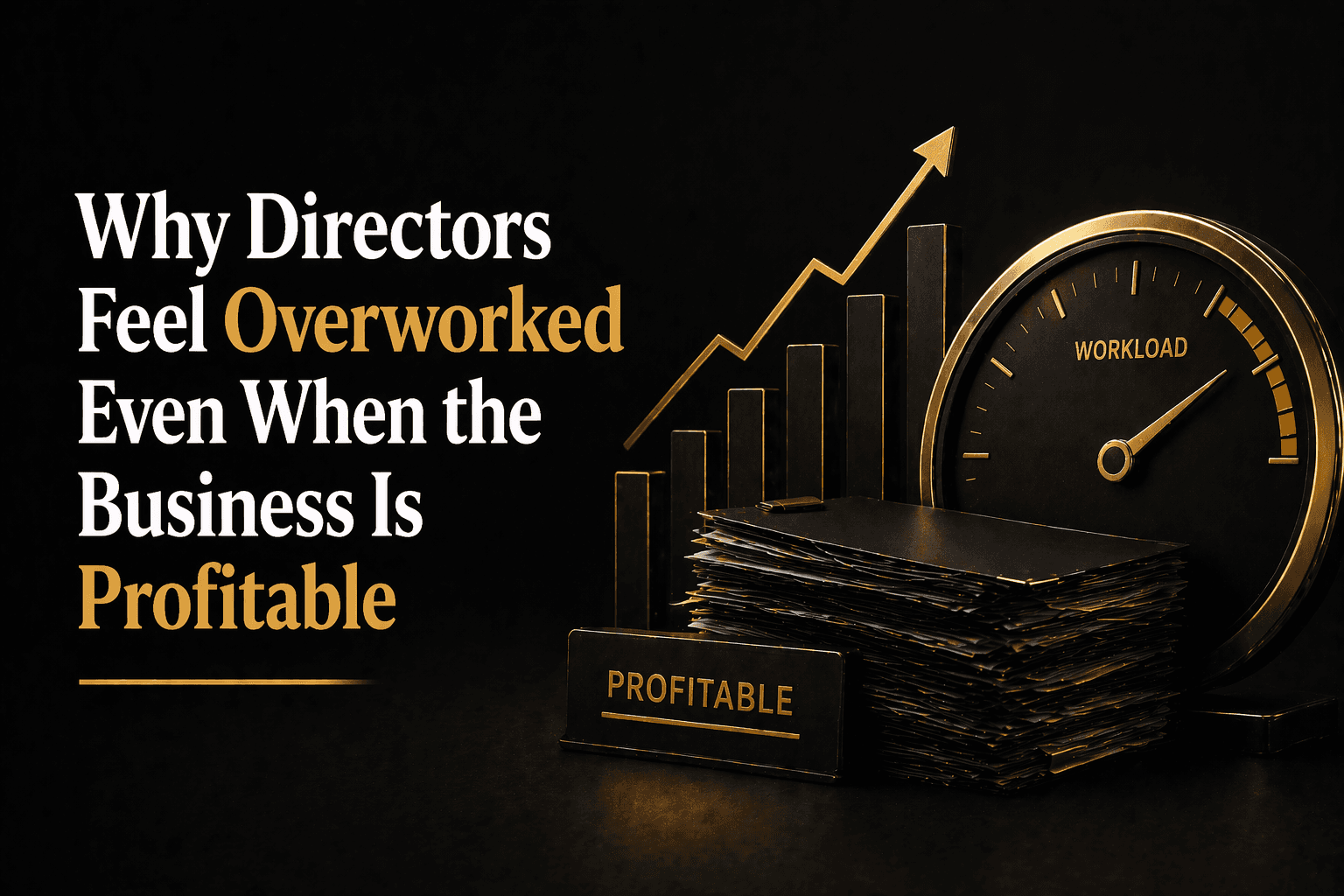
Why Directors Feel Overworked Even When the Business Is Profitable
Most directors assume feeling overworked is the price of growth. It is not. When a profitable business still consumes every hour of leadership attention, the problem is structural. Decision authority stays concentrated at the top, managers escalate instead of resolve, and governance load compounds quietly in the background. This post breaks down the seven structural causes of director overload and the five systems that fix them.

When NOT to Scale a Business
Growth is not always the correct strategic move. For established businesses, scaling at the wrong time can amplify operational weaknesses, cash flow instability, and governance risk. This article outlines the signals directors should recognise before deciding whether expansion will strengthen the organisation or destabilise it.
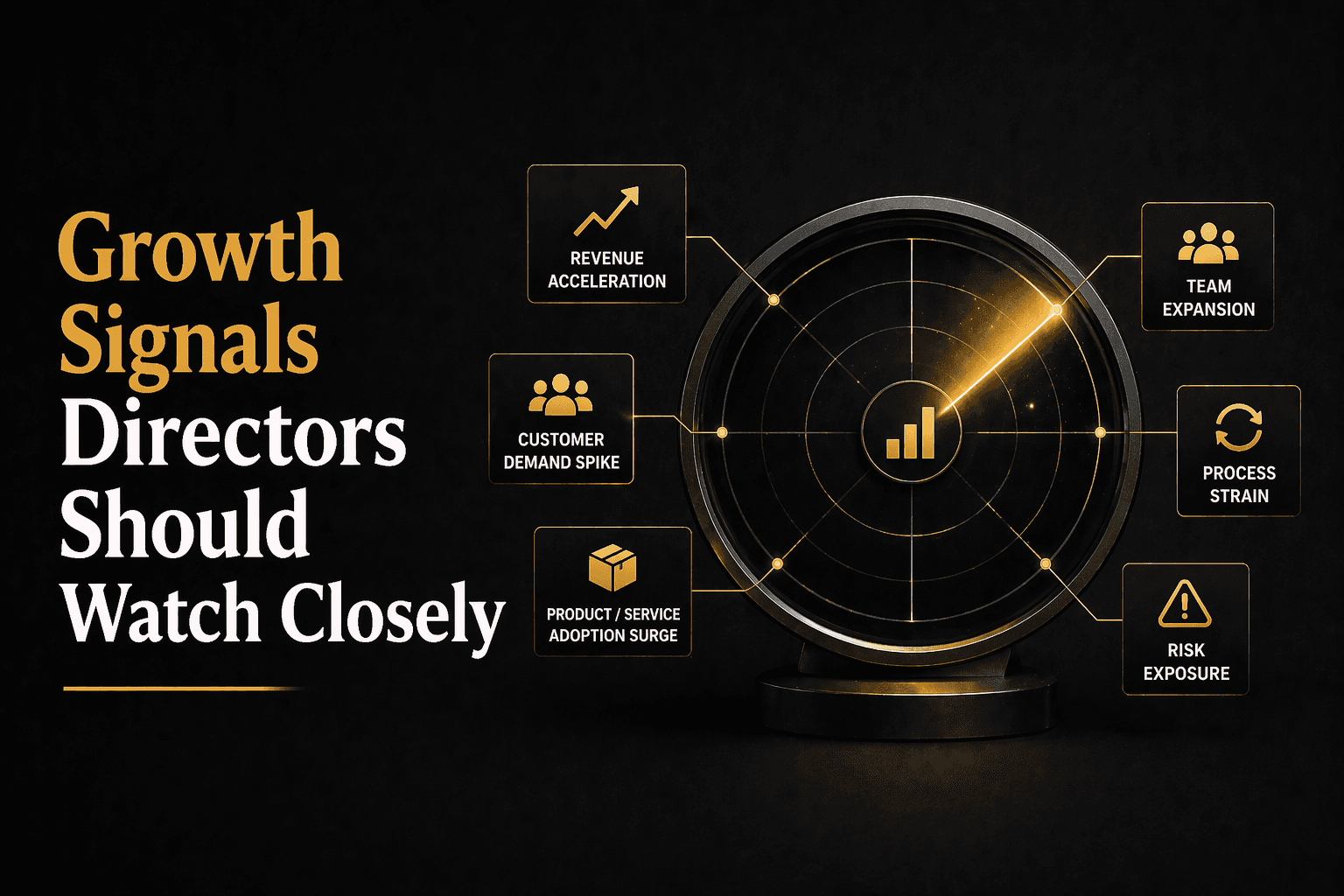
Growth Signals Directors Should Watch Closely
Growth creates subtle signals long before operational failure appears. Directors who recognise early indicators of structural strain can stabilise systems before expansion introduces financial, operational, or compliance risk.
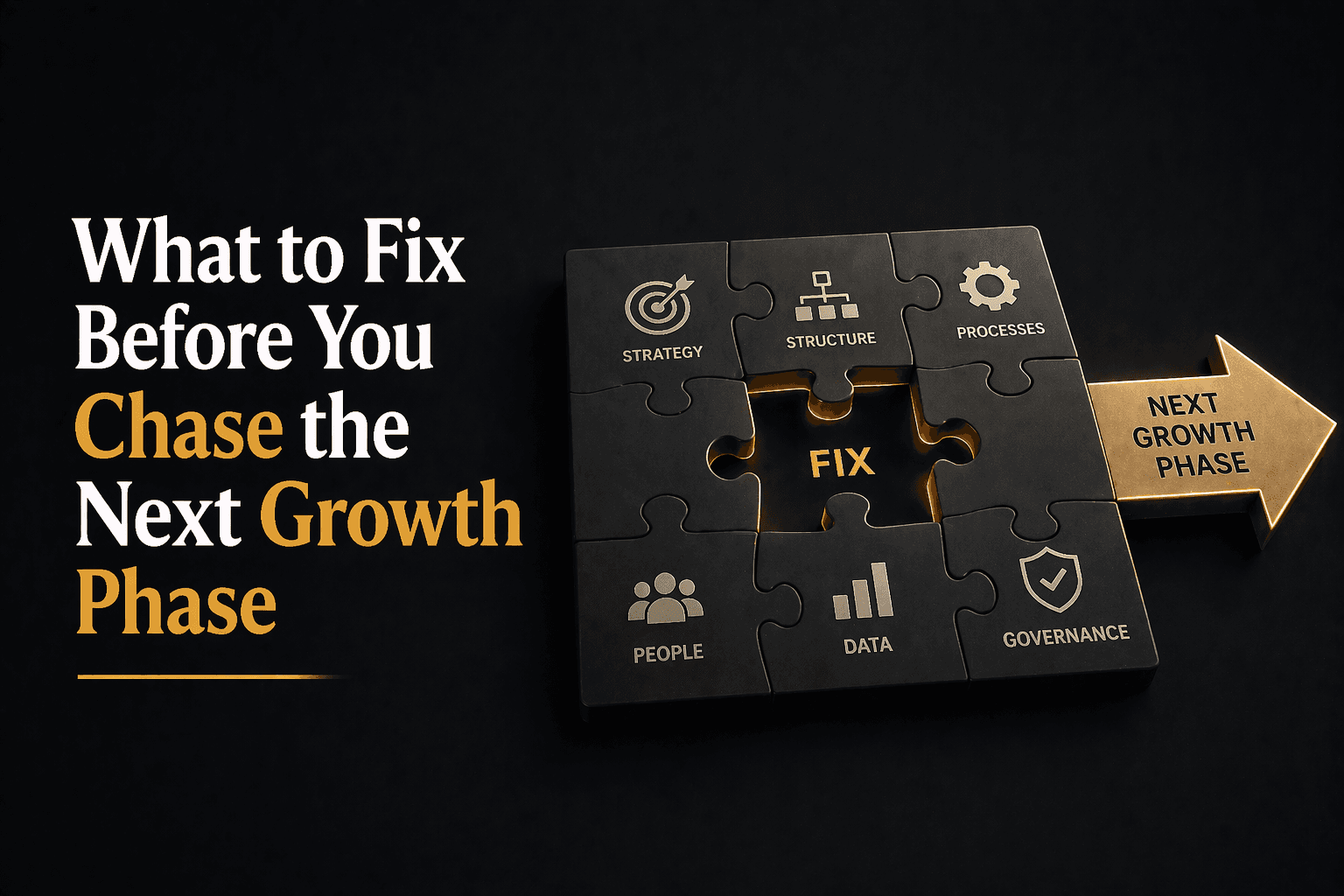
What to Fix Before You Chase the Next Growth Phase
Growth often exposes structural weaknesses inside established businesses. Before pursuing the next expansion phase, directors must stabilise cash visibility, decision rights, operational systems, and management accountability to prevent scale from amplifying risk and operational fragility.

The Right Way to Scale Without Burning Out the Team
Rapid growth can overload teams, damage culture, and create operational fragility if structure does not evolve with scale. This article explains how directors implement systems, operating cadence, and management accountability to expand capacity without exhausting staff or increasing organisational risk.

Why Growth Breaks More Businesses Than It Builds
Growth is commonly treated as success, yet expansion introduces operational complexity, financial pressure, and governance risk. This article explains why growth destabilises established businesses when systems fail to evolve and outlines the director-level controls required to scale without exposing the organisation to structural failure.
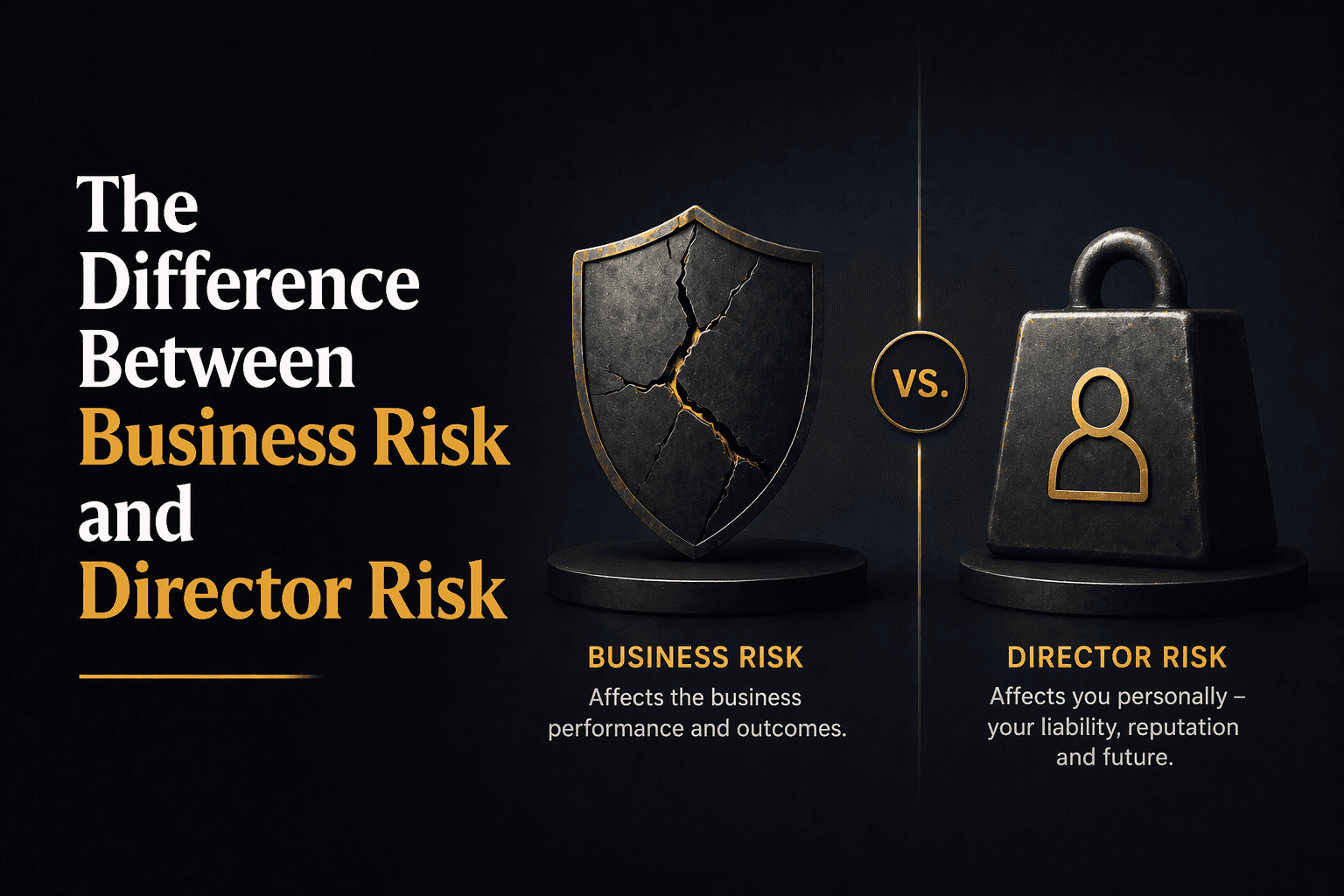
The Difference Between Business Risk and Director Risk
Business risk affects performance. Director risk affects personal liability. As companies scale, the distinction becomes critical. This article outlines how operational exposure differs from director-level legal and financial responsibility, and the governance systems required to protect both the organisation and the individual carrying statutory duty.
Why “Everything Looks Fine” Is a Dangerous Assumption
When directors rely on surface stability, risk compounds beneath operational growth. This article explains why the “everything looks fine” assumption creates financial, compliance, and governance exposure in established businesses and outlines the systems required to replace assumption with control.

The Most Common Blind Spots in Growing Businesses
Growing businesses face operational blind spots that increase compliance exposure, financial risk, and governance failures. This article outlines the most common structural weaknesses directors overlook during scale and provides a practical framework to regain control before risk compounds.
How Directors Can Protect Themselves While Scaling
Scaling increases exposure. Learn how Directors can protect themselves financially, legally, and operationally while expanding their business.
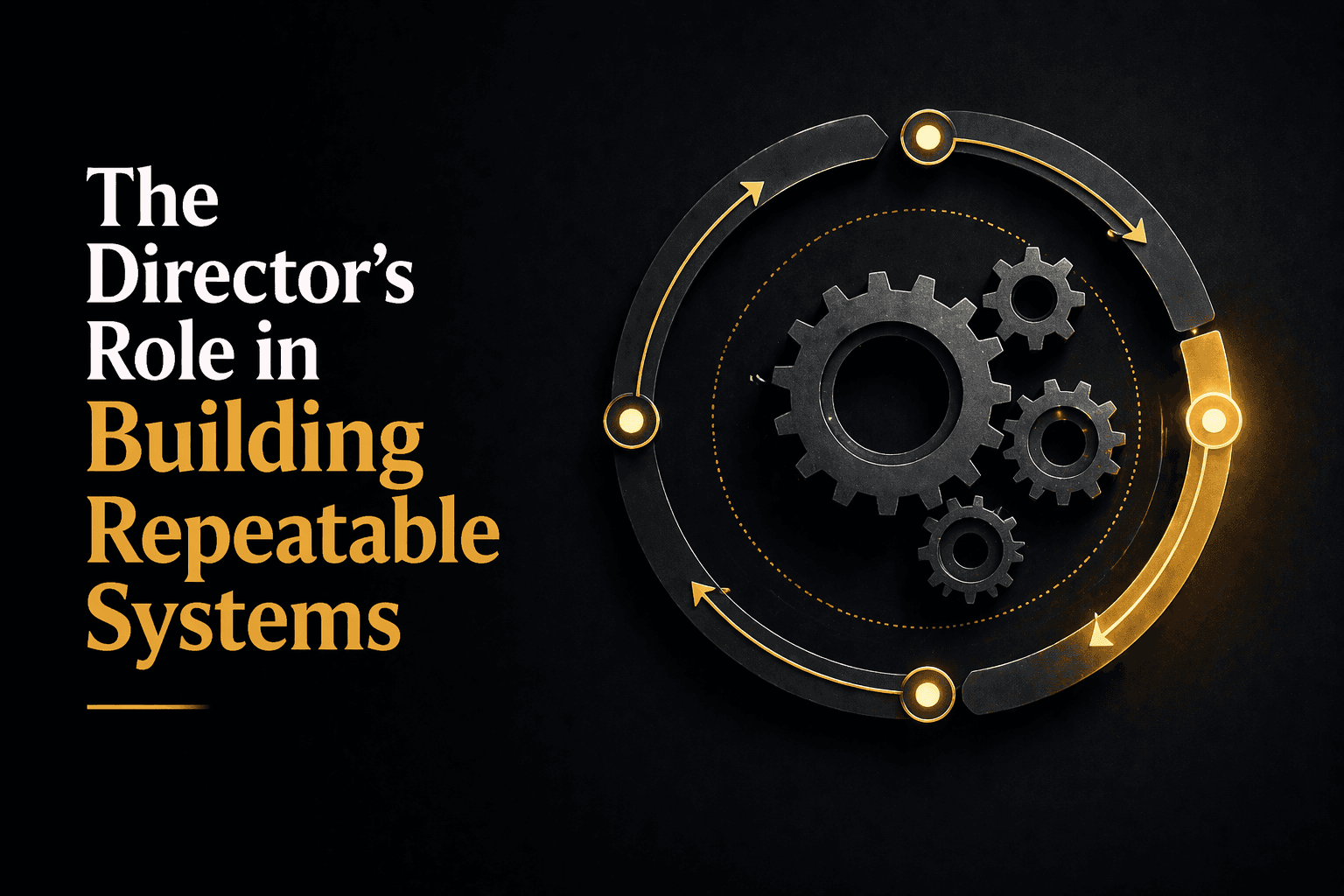
The Director’s Role in Building Repeatable Systems
Repeatable systems do not build themselves. Discover the Director’s role in designing structure that removes founder dependency and enables controlled scale.

The Risks Directors Ignore Until It’s Too Late
Most business failures are preventable. Discover the structural risks Directors ignore until pressure exposes them and how to correct them early.
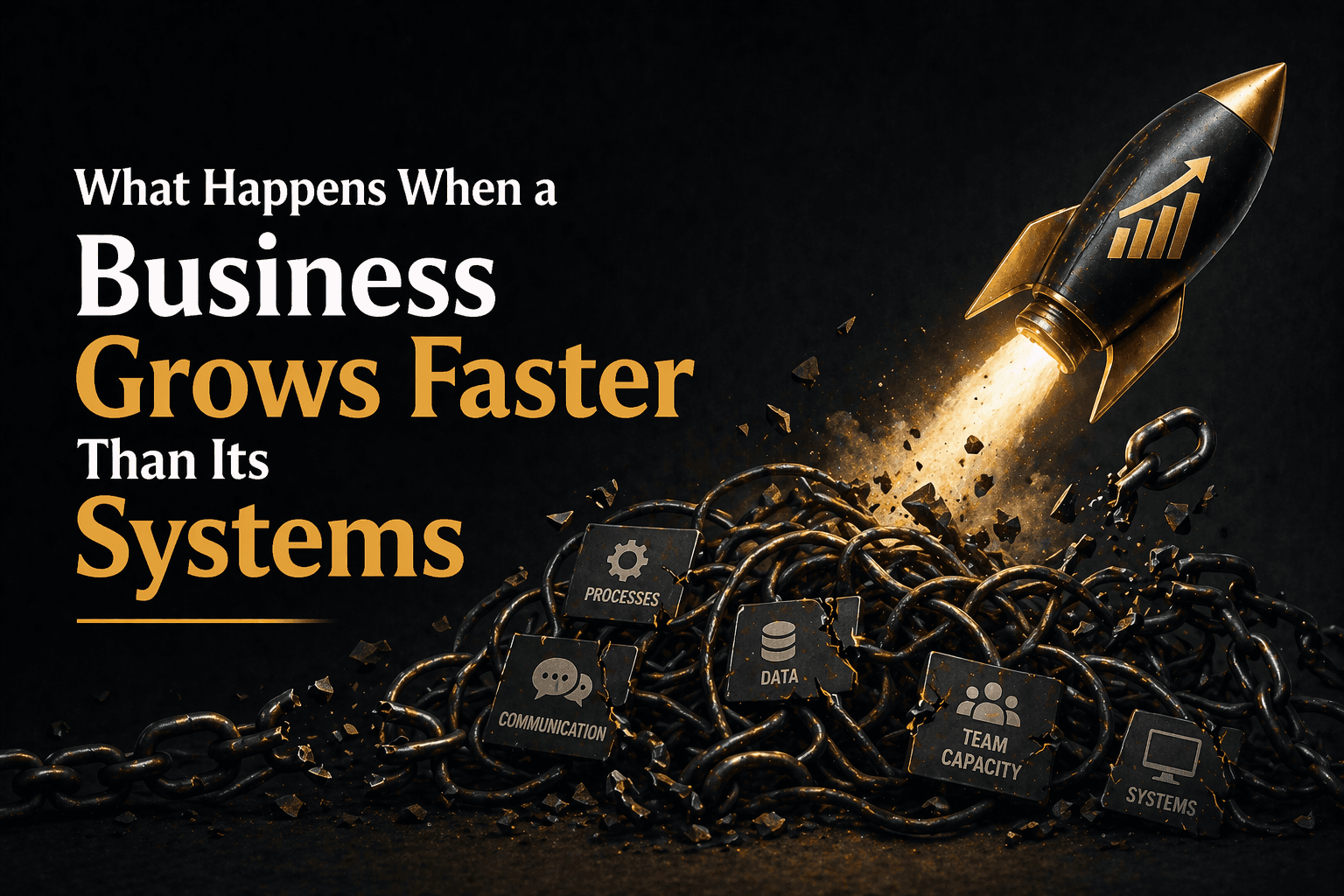
What Happens When a Business Grows Faster Than Its Systems
When a business grows faster than its systems, instability follows. Learn the structural risks of rapid growth and how to regain control before damage compounds.
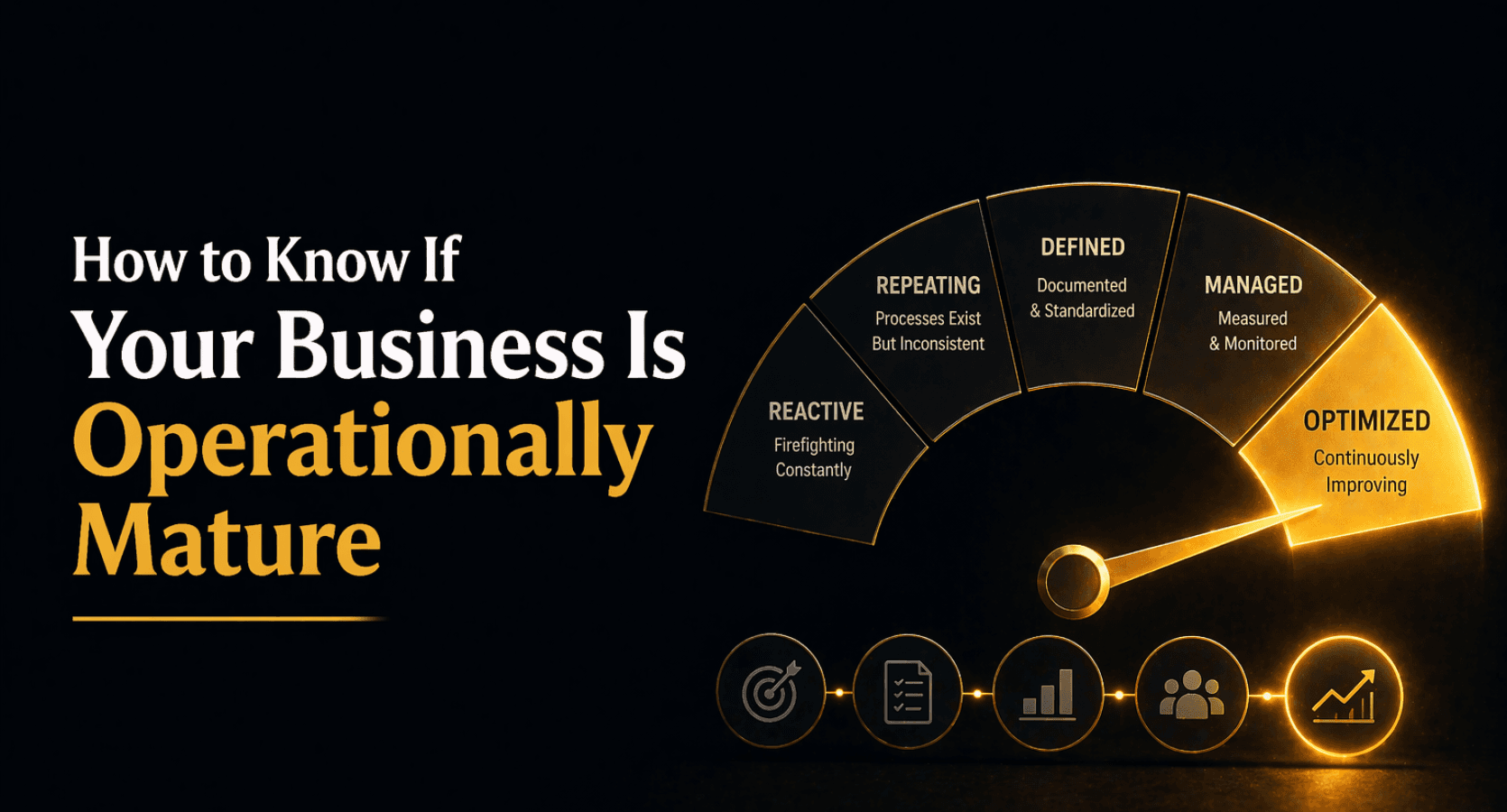
How to Know If Your Business Is Operationally Mature
Operational maturity determines whether a business can scale safely. Learn the structural signs of a mature operation and how to identify hidden risk.
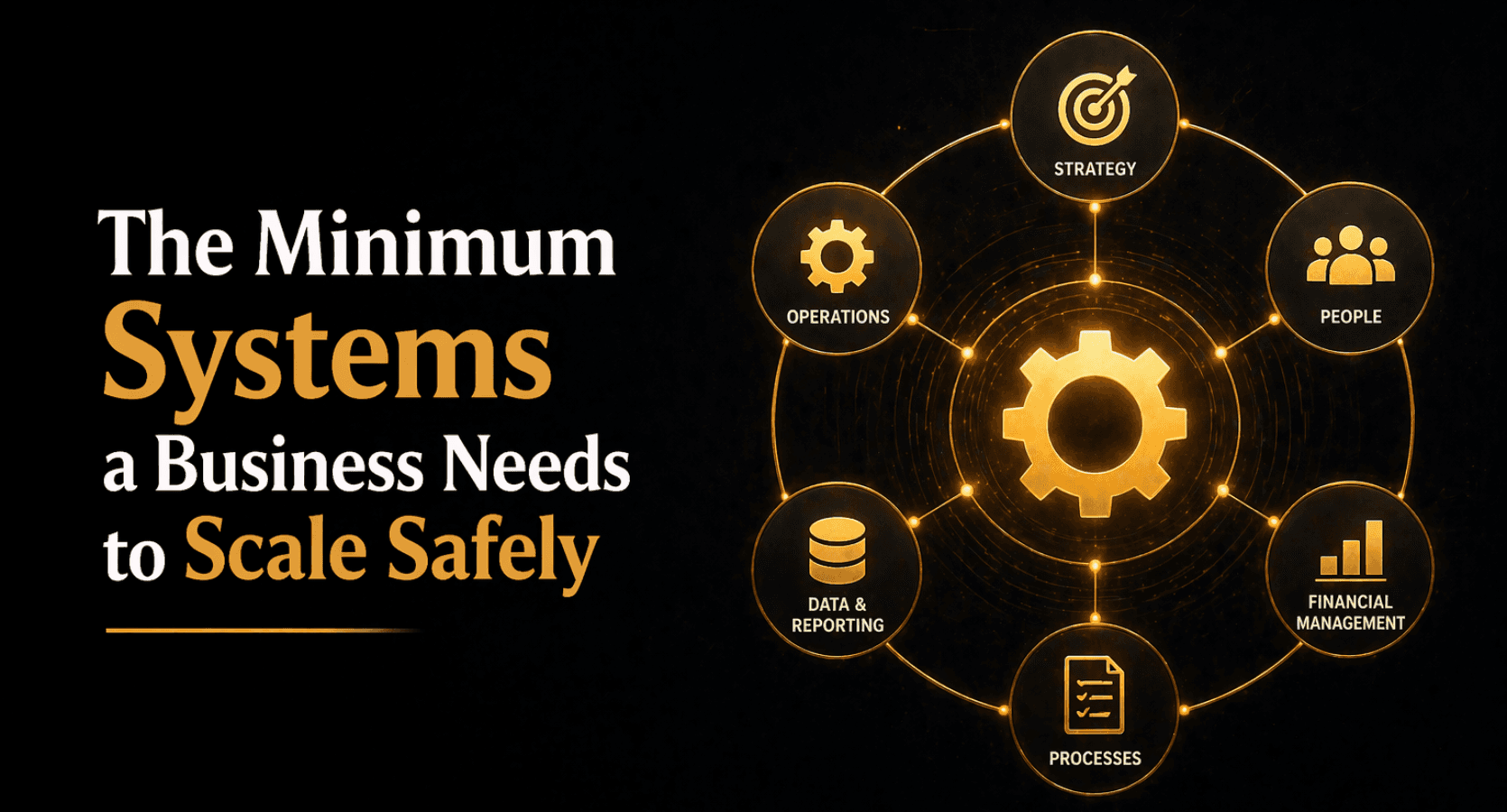
The Minimum Systems a Business Needs to Scale Safely
Scaling without systems increases risk. Discover the minimum business systems required to grow safely and protect margins, quality, and stability.

Why Systems Beat Hustle Every Time
Hustle might grow revenue in the short term, but it destroys scalability, margin, and leadership clarity. This guide explains why systems beat hustle every time, and how directors build structured operating models that create consistent profit, controlled growth, and reduced dependence on the owner.

The Silent Cash Leaks Most Directors Never See
Most cash losses in established businesses aren’t fraud or a bad month, they’re structural leaks. This article outlines where cash quietly escapes, the controls to stop it, and a director-level weekly cadence to keep working capital and margin tight.

How to Read Your Numbers Without Being an Accountant
You don’t need to be an accountant to run financial control. You need a director’s method: a tight reporting pack, a few non-negotiable metrics, and rules for cash, margin, and working capital decisions.
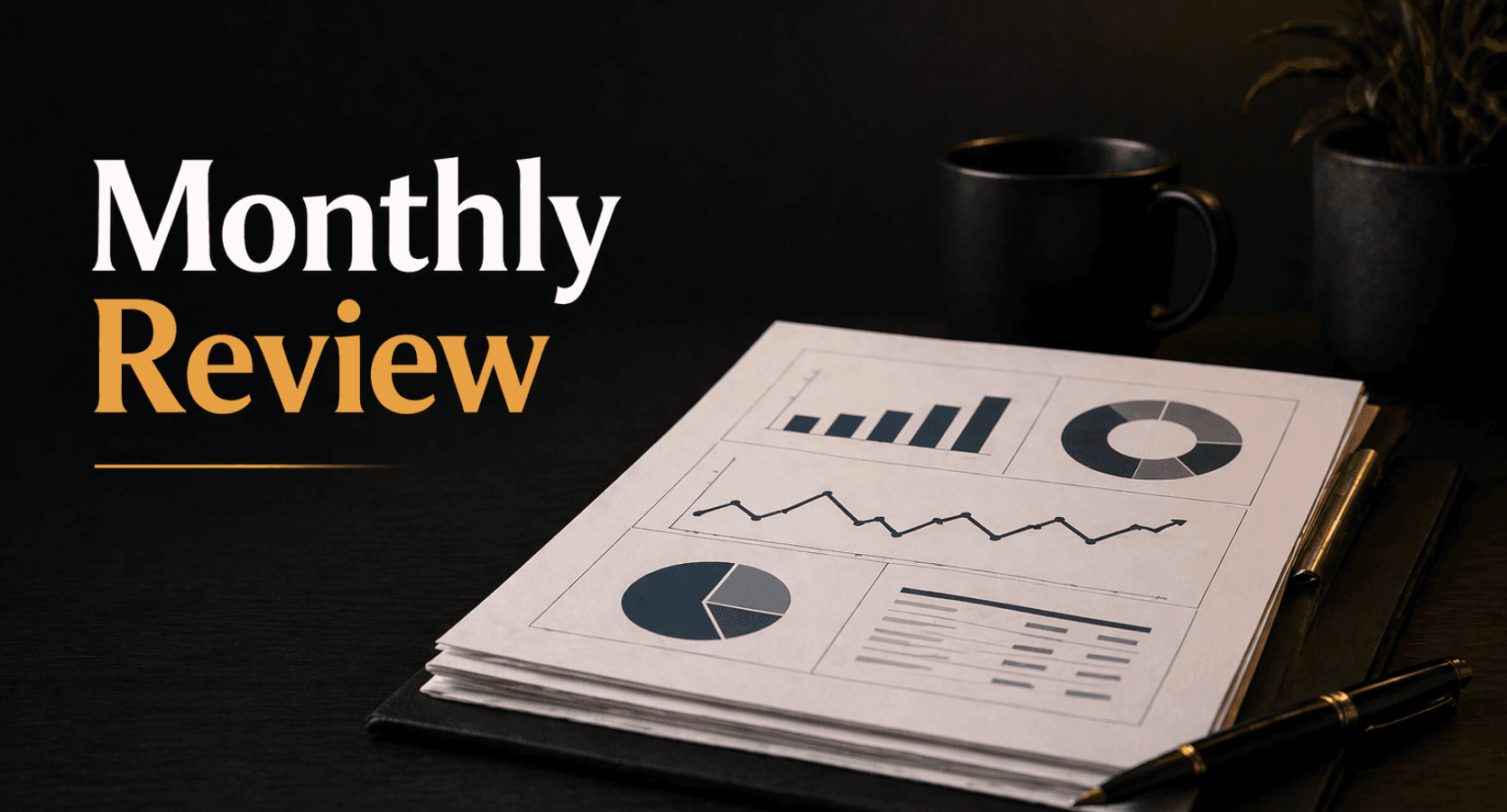
The Financial Reports Every Director Should Review Monthly
A director-level monthly reporting pack isn’t accounting hygiene. It’s control. Here are the specific reports to review every month to manage cash, margin, working capital, covenants, and compliance exposure, plus a director ruleset and a practical weekly checklist.
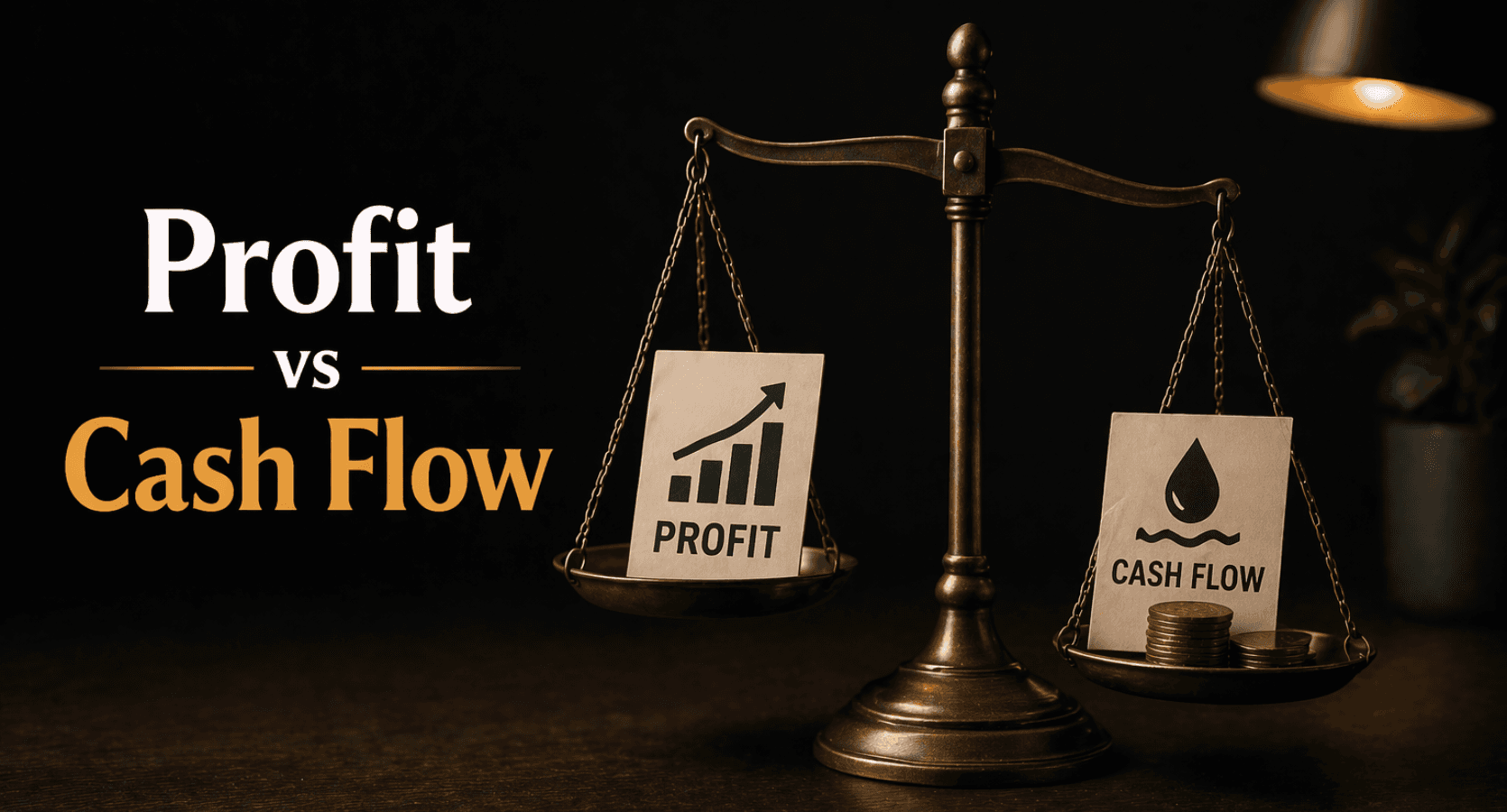
Profit vs Cash Flow: Why Directors Must Understand Both
Established businesses can be profitable and still fail from cash timing, working capital blowouts, and compliance arrears. This article explains the structural differences between profit and cash, and the director rules to control both.

Why Profitable Businesses Still Run Out of Cash
Profitable businesses fail for cash reasons, not profit reasons. This article breaks down the working-capital mechanics, reporting blind spots, and director operating rules that prevent liquidity shocks as complexity grows.

The Difference Between a Scalable Business and a Fragile One
Scalable businesses absorb growth without breaking: cash stays controlled, delivery stays consistent, and decisions are made with reliable data. Fragile businesses grow on improvisation, heroics, and hidden risk. This article sets director-level rules and actions to harden operations and scale with control.
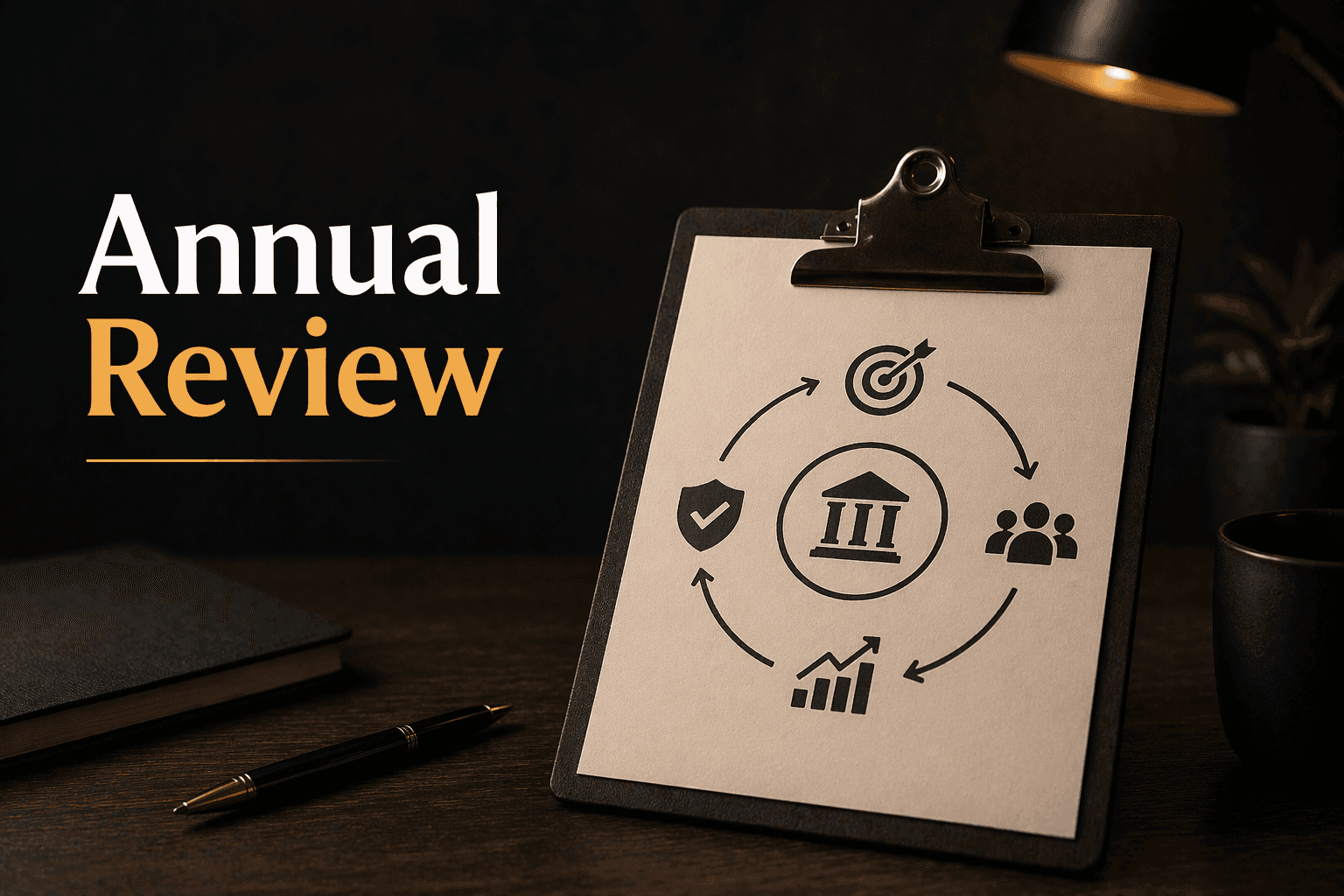
What Directors Should Review Annually in Their Business Structure
An annual structure review is a director control cycle: confirm your entities still match how the business actually operates, tighten governance and approvals, reduce liability and tax/compliance risk, and remove structural drag that creates cash flow and decision errors at scale.
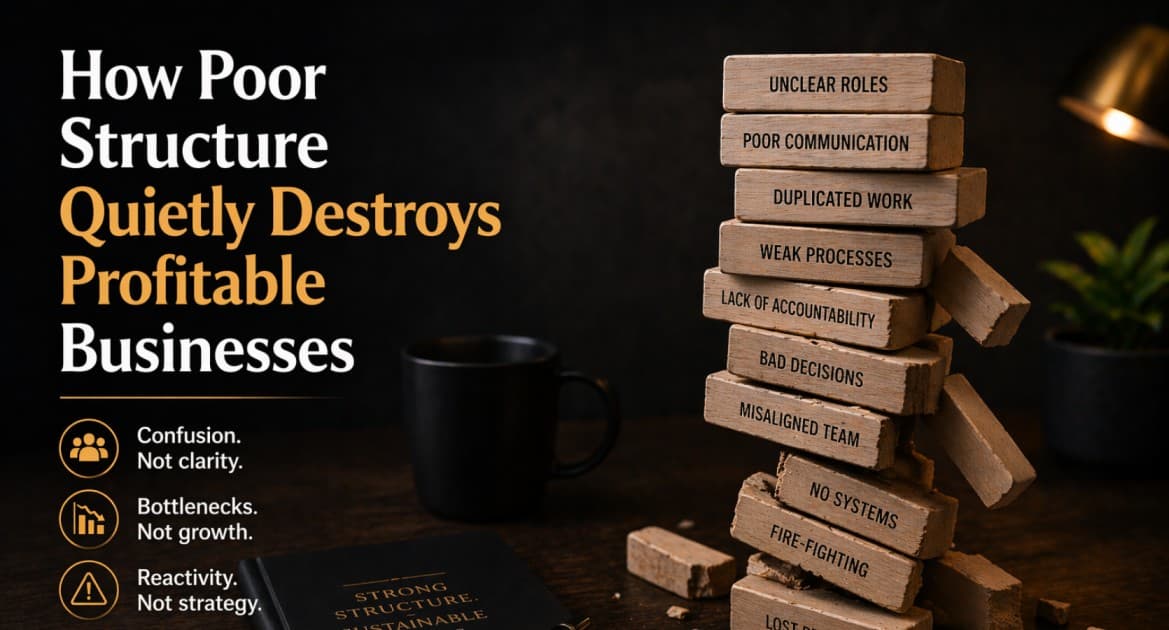
How Poor Structure Quietly Destroys Profitable Businesses
Profitable businesses rarely fail from lack of demand. They fail when structure can’t carry complexity: unclear accountability, weak controls, slow decisions, and unmanaged risk. This article outlines what breaks, how it shows up, and the director-level rules to fix it.
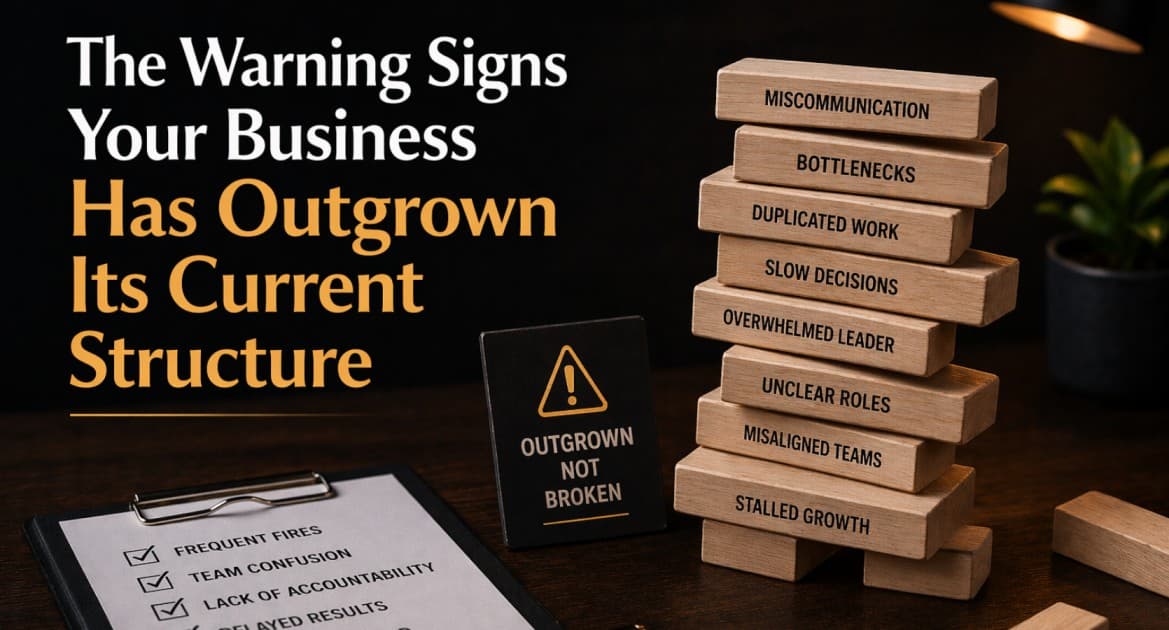
The Warning Signs Your Business Has Outgrown Its Current Structure
Established businesses outgrow structures quietly, until cash, delivery, and compliance start breaking. This article outlines the warning signs directors should treat as structural, not “people problems”, and the operating rules to restore control.

Why Business Structure Matters More as You Scale
Scaling exposes every weakness in your structure: tax, liability, cash flow control, and decision rights. This article sets out the director-level reasons structure matters more at scale, the rules to run it properly, and what to fix this week before growth turns into avoidable risk.

The Hidden Cost of Avoiding Hard Decisions as a Director
At scale, avoided decisions don’t disappear, they compound into cost, risk, and operational drag. This article breaks down where the damage hides and gives director-grade rules and weekly actions to force clarity, reduce exposure, and restore control.
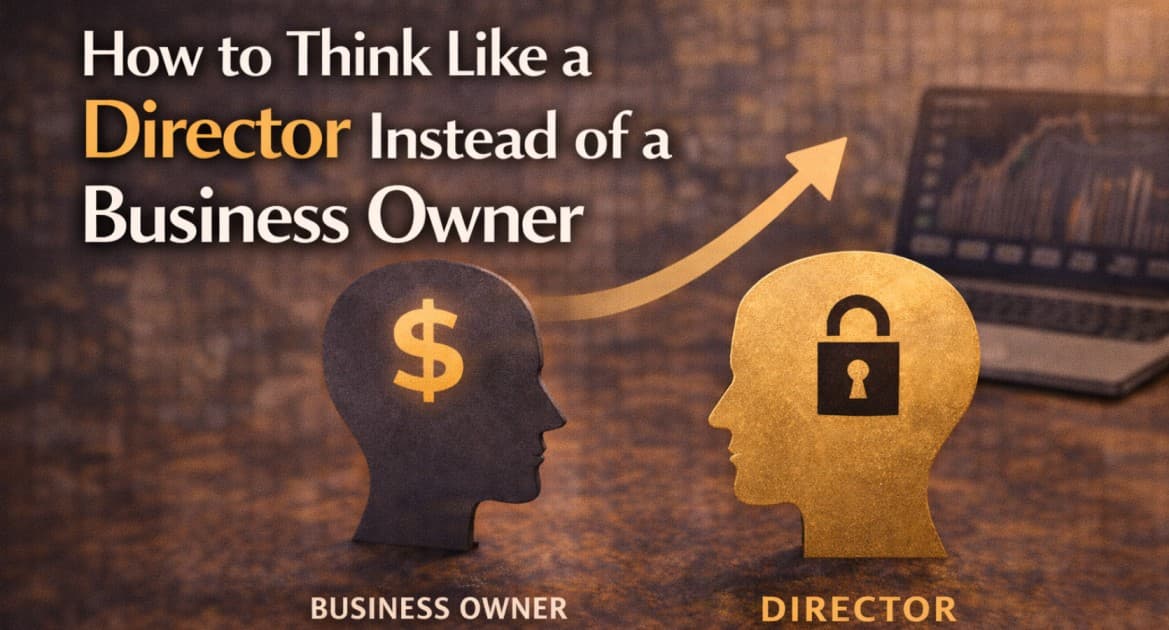
How to Think Like a Director Instead of a Business Owner
Established businesses don’t fail from lack of effort; they fail from weak control. This article outlines how directors think: governance, cash discipline, risk management, decision cadence, and accountability systems that scale.
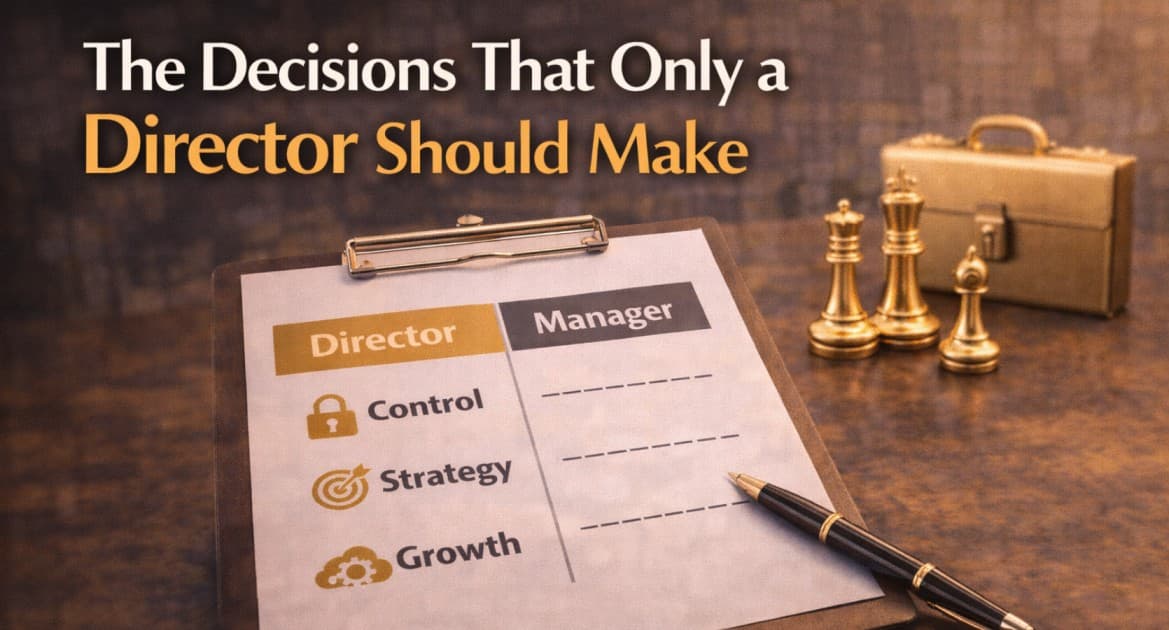
The Decisions That Only a Director Should Make
In a scaled business, confusion over who decides what creates risk, rework, and slow execution. This article defines the decisions that must stay with the director and the operating rules that prevent authority drift.
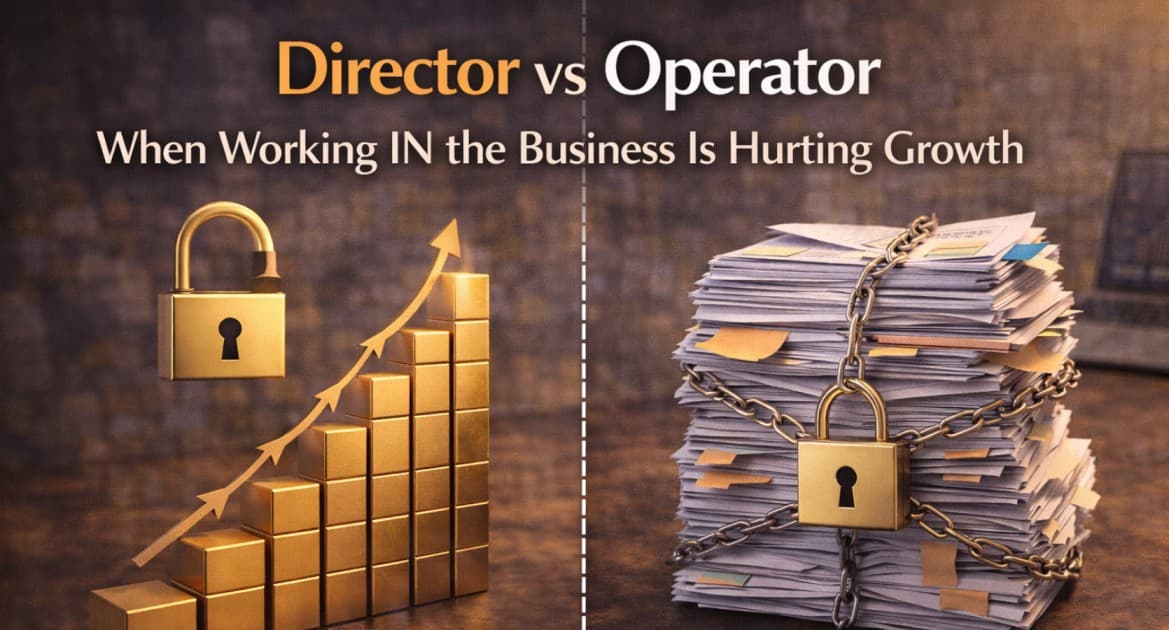
Director vs Operator: When Working IN the Business Is Hurting Growth
If you’re still the operational hub, you’re creating fragility, slowing decisions, and increasing compliance and cash risk. This article lays out the practical director-level systems to exit day-to-day operations without losing control.
The Real Job of a Company Director (And Why Most Get It Wrong)
Most directors stay trapped in operational work and call it leadership. This article defines the actual director job at scale: governance, risk control, decision cadence, and the non-negotiable systems that protect profit and reduce legal exposure.

The Director’s Hiring Framework: Who to Hire Next
If you’re past $800K revenue, the wrong hire creates drag across cash, delivery, and compliance. This framework shows directors how to choose the next role using constraints, unit economics, risk exposure, and operating cadence so you hire for throughput and control, not convenience.
How to Manage Underperforming Employees (Director Guide)
Underperformance at decent revenue is an operational risk, not a “people issue.” This guide gives directors a practical system to diagnose, document, remediate, redeploy, or exit underperformers quickly while controlling compliance and cash costs.

Why Your Team Doesn’t Take Ownership (and How to Fix It)
If your team avoids ownership, it’s rarely a motivation problem. It’s unclear decision rights, weak operating cadence, fuzzy KPIs, and no consequence path. This article lays out director-level fixes that force clarity, speed, and accountability without micro-management.

How to Improve Team Performance Without Hiring More People
If you’re already profitable, headcount isn’t your first lever. This article shows director-level systems to lift throughput, reduce rework, and improve accountability without adding people.
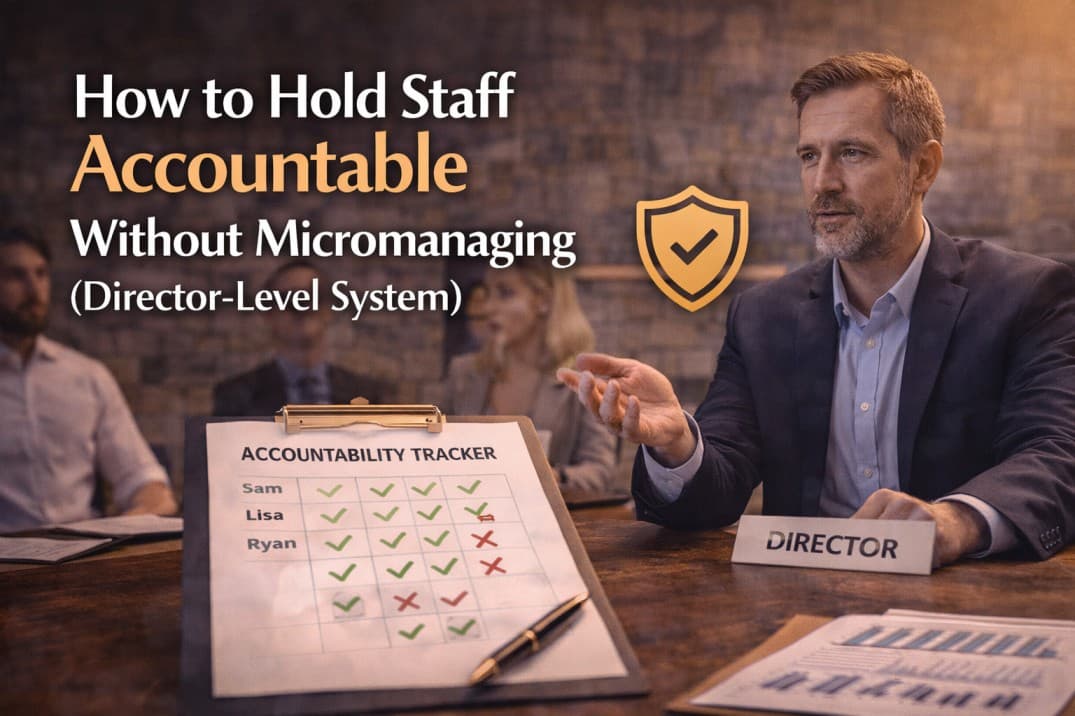
How to Hold Staff Accountable Without Micromanaging (Director-Level System)
If your business is past $800K revenue, “trust people” isn’t a control system. This article shows how directors install accountability through clear outputs, scorecards, decision rights, meeting cadence, and consequences, without daily interference or micromanagement.

How to Hire Your First Manager (Complete Guide)
Hiring your first manager is a structural change, not a recruitment task. This guide shows directors how to design the role, control risk, interview properly, set compensation, and onboard with operating rhythms.
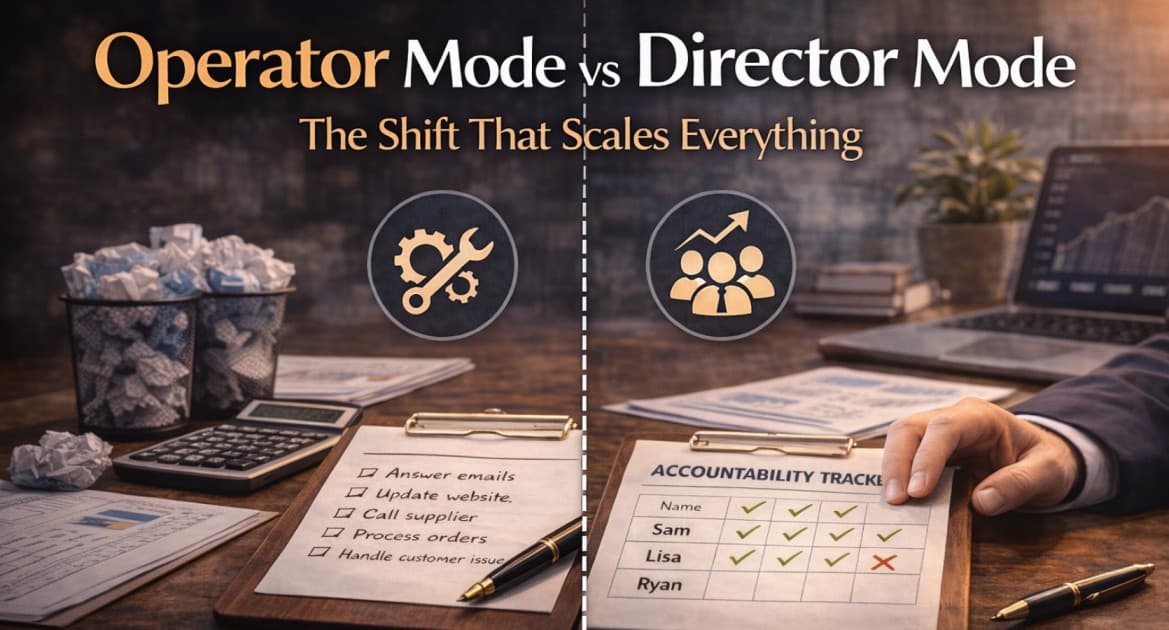
Operator Mode vs Director Mode: The Shift That Scales Everything
If you’re still running the business through yourself, growth is capped by your time and attention. This article lays out the director-mode operating system: decision rights, cadence, KPIs, accountability, and risk controls that scale a profitable business without creating chaos.
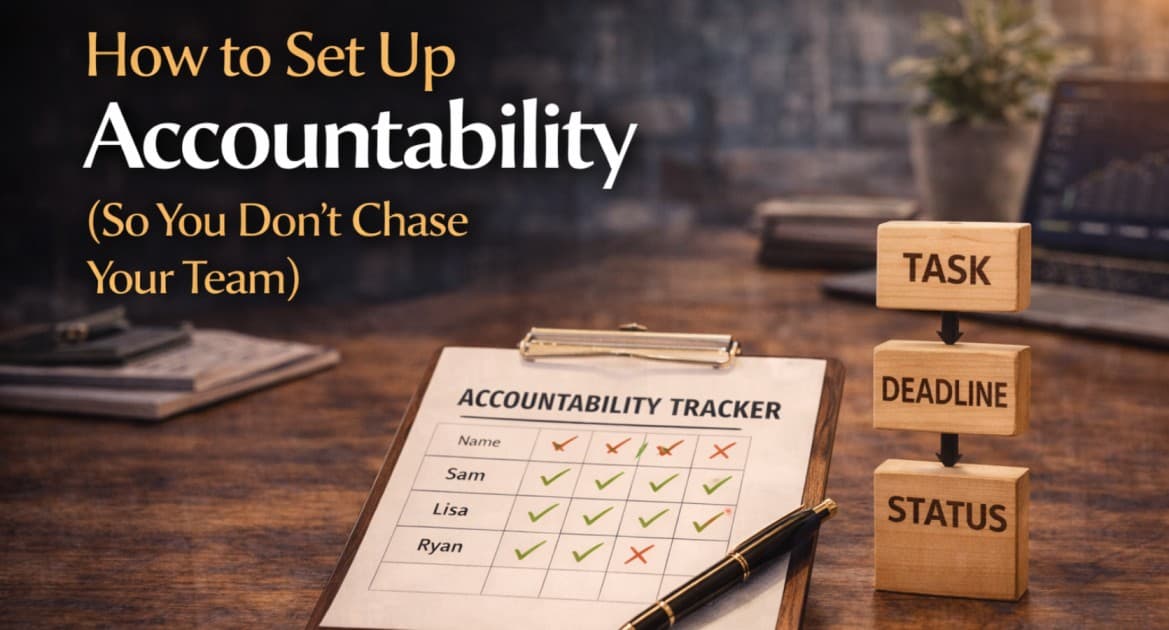
How to Set Up Accountability (So You Don’t Chase Your Team)
If you’re chasing updates, you don’t have an accountability problem, you have a system gap. This article shows the director-level operating rules, scorecards, meeting cadence, and consequences that make performance predictable without you micromanaging.
How to Run a Business That Doesn’t Need You Daily
If your $800K+ business needs you daily, you don’t have a leadership system, you have a dependency. This article lays out the structures, roles, rhythms, and controls that make performance repeatable without the owner in the loop.
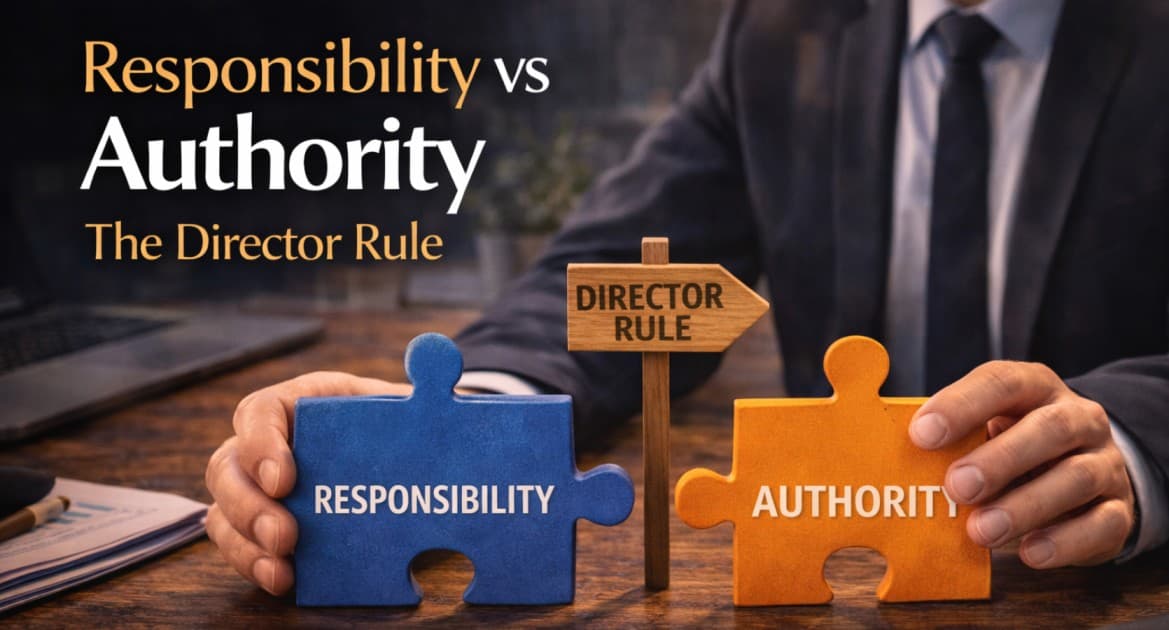
Responsibility vs Authority: The Director Rule
In profitable businesses, “accountability” without authority creates silent failure: missed numbers, compliance exposure, and team resentment. This article sets director-level rules to align decision rights with outcomes, using delegations, role charters, and operating rhythms you can implement immediately.

How to Stop Making Every Decision in Your Business
If every decision still lands on your desk, you don’t have a “delegation” problem, you have a decision system problem. This guide shows directors how to stop being the bottleneck using rules, thresholds, and operating structure.

How to Build a Leadership Layer (Managers That Actually Lead)
If your managers “manage” but you still carry delivery, people issues, and decisions, you don’t have a leadership layer. This guide shows directors how to build one with clear decision rights, operating cadence, measurable standards, and consequences, so the business stops bottlenecking at you.

What to Delegate First as a Business Owner (Checklist)
If you’re making decent revenue, delegation isn’t about “freeing your time”, it’s about removing the director bottleneck. This checklist shows what to delegate first, how to sequence it, and the rules that stop delegation turning into chaos, rework, and margin leakage.
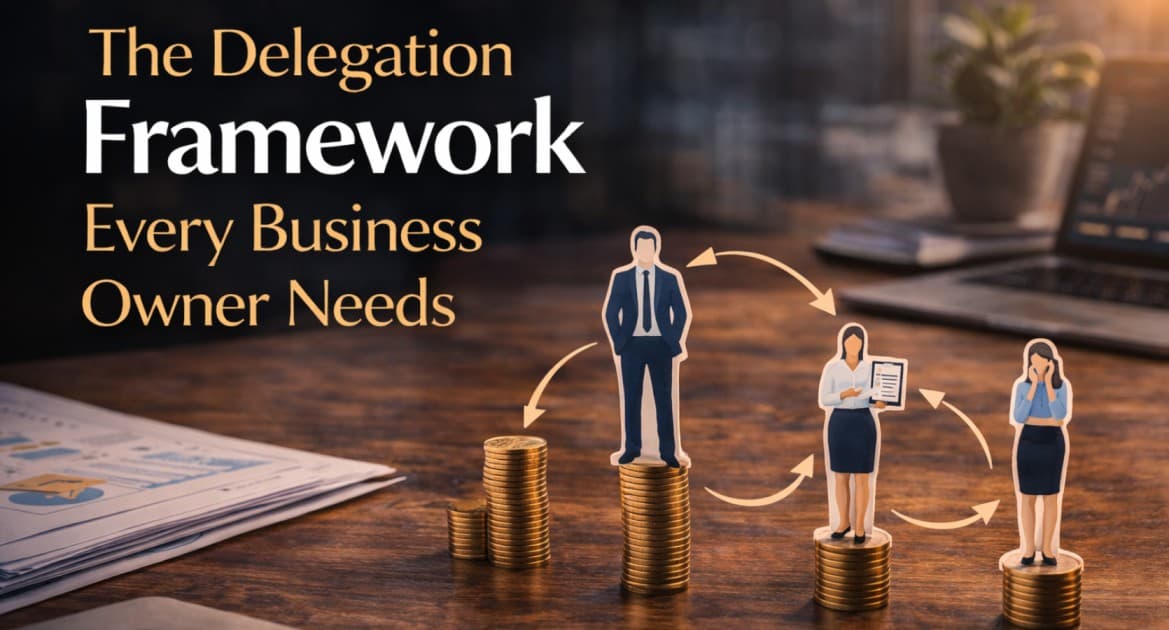
The Delegation Framework Every Business Owner Needs
If you’re the bottleneck in a profitable business, “delegate more” is useless advice. This delegation framework gives director-level rules, thresholds, and operating constraints to transfer outcomes (not tasks) without quality drifting or margins collapsing.

How to Delegate Without Losing Control
Delegation at a good revenue isn’t about “letting go”. It’s about building control through decision rights, standards, and operating rhythms so work moves without you, and doesn’t break delivery, margin, or reputation.

How to Stop Being the Bottleneck in Your Business (Director Delegation)
If you’re the throughput limiter in a profitable business, “delegate more” won’t fix it. This guide gives director-level rules, structures, and operating constraints to stop being the bottleneck, protect margin, and scale delivery without chaos.

The Complete Guide to Process Improvement for Small Businesses
Most business owners try to improve efficiency by pushing harder, working longer, or expecting the team to “step up.” That approach scales pressure, not performance. This director-level guide shows how to improve business efficiency without working more by removing waste, standardising critical workflows, reducing rework, tightening priorities, and building a weekly rhythm that increases output and margin using the same team and the same hours.

How to Fix Operational Chaos (Director-Level Method)
Operational chaos isn’t caused by workload. It’s caused by missing structure. When roles are unclear, systems are optional, priorities shift constantly, and problems repeat, directors get trapped in daily firefighting. This guide outlines a director-level method to regain control by installing five core controls: clear ownership, a standardised critical path, a weekly operating rhythm, a performance scorecard, and an issue elimination system. Chaos doesn’t disappear with more effort. It disappears when structure replaces reaction.

How to Build a Business Scorecard (KPIs That Matter)
Most directors track too many numbers and still don’t have control. A business scorecard is not a reporting exercise, it’s a weekly decision tool that tells you what’s improving, what’s breaking, and what needs action. This guide shows how to build a director-grade scorecard using KPIs that matter across sales, delivery, cash, and profitability. So the business runs on visibility, not vibes.

The Weekly Operating Rhythm Every Director Needs
Most businesses don’t have a performance problem, they have a rhythm problem. Without a weekly operating rhythm, directors become reactive, teams lose focus, issues repeat, and cash pressure builds quietly. This guide gives directors a simple weekly cadence to run the business with control: scorecards, priorities, delivery oversight, cash discipline, accountability, and decision structure without overcomplicating it.

Standardise Delivery Without Killing Flexibility
Most directors avoid standardising delivery because they fear becoming rigid, losing customisation, or damaging client experience. But inconsistent delivery is what causes rework, margin loss, and chaos. This guide shows how to standardise delivery without killing flexibility by locking the critical path, defining standards, building modular service components, and allowing controlled variation where it matters, not everywhere.

How to Write SOPs That Work (and Get Used)
Most SOPs fail because they’re written like manuals; too long, too vague, and disconnected from real workflow. This guide shows directors how to write SOPs that work and actually get used by building one-page execution systems, embedding them into daily operations, assigning ownership, and enforcing compliance through leadership rhythm. Less chaos. More consistency. No guesswork.

The Operating System Every Business Needs to Scale
Most businesses don’t fail because of lack of demand. They fail because the business relies on the owner for decisions, delivery, and stability. This guide explains the operating system every scaling business needs: clear roles, scoreboards, weekly rhythms, process ownership, accountability, and decision structure. It’s the foundation for consistent performance, predictable profit, and growth without chaos.

Scale a Service Business Without Burning Out
Scaling a service business shouldn’t mean longer hours, constant stress, or being chained to delivery. This guide shows directors how to scale without burning out by tightening service delivery systems, protecting margin, removing low-value work, delegating properly, and building an operating model that grows revenue while reducing dependence on the owner.

Build Systems Your Team Actually Follows (Director Guide)
Most business systems fail because they’re written like a manual, not built like an operating system. This guide shows directors how to build systems their team actually follows by designing processes around real workflow, making systems easy to execute, tying them to accountability, and reinforcing them through weekly leadership rhythm. Less chaos. More consistency. No guesswork.

How to Pay Yourself Properly as a Business Owner (Director Structure)
Many business owners pay themselves based on whatever is left in the bank, and that’s why cash stays unstable, tax bills shock them, and profit feels inconsistent. This director-level guide explains how to pay yourself properly using a structured system: baseline pay, profit allocations, tax planning, and disciplined distributions that protect cashflow and build long-term wealth.
How to Increase Profit Without Hiring More Staff
Most directors think profit increases by hiring more staff or pushing more sales. That’s the slow path. This guide shows how to increase profit without hiring more staff by tightening pricing, improving gross margin, reducing delivery leakage, stopping rework, controlling overhead, and installing a weekly rhythm that makes profit predictable, without adding headcount pressure.
How to Control Expenses Without Cutting Growth (Director Model)
Most directors either ignore expenses until cash gets tight, or panic-cut costs and damage delivery. This guide shows how to control expenses without cutting growth using a director-grade model: tighten cost controls, eliminate waste, protect high-impact spend, and build a monthly expense rhythm that improves profit while keeping momentum.

How to Forecast Cashflow (Simple System for Established Businesses)
Cashflow problems usually aren’t caused by lack of sales, they’re caused by lack of visibility and control. This guide shows directors how to forecast cashflow using a simple weekly system that predicts cash pressure early, prevents surprises, and improves decision-making. You’ll learn the exact structure of a 13-week cashflow forecast, what to include, and how to run it like a real director.

Revenue vs Profit vs Cash: The Director’s Guide (With Examples)
Most business owners talk about “doing well” based on revenue, then get blindsided by tax bills, payroll pressure, or a tight bank balance. This director-level guide explains revenue vs profit vs cash with clear examples, shows why profitable businesses can still run out of money, and outlines the practical levers that improve margins and cashflow without relying on guesswork.

How to Stop Profit Leaks in Your Business (Monthly Audit System)
Profit leaks don’t show up as one big problem. They drain margin quietly through pricing errors, rework, inefficiencies, weak controls, and unmanaged overhead. This guide shows directors how to stop profit leaks using a simple monthly audit system that protects gross margin, improves cashflow, and restores control without increasing sales or cutting growth.

The Ultimate Guide to Pricing for Profit (Service Businesses)
If your service business is doing $800K+ and profit still feels inconsistent, your pricing isn’t disciplined enough, and it’s costing you margin every week. This guide shows directors how to price services for profit using cost control, margin targets, pricing floors, quoting structure, variation rules, and a scalable pricing system that doesn’t rely on guesswork. Because you can’t scale a service business on busy, you scale it on margin.

Fix Cash Flow Problems Without Increasing Sales
If sales are strong but cash is tight, the issue is usually timing, not revenue. This director framework shows how to fix cashflow through billing speed, WIP control, payment terms, collections, and weekly forecasting.

Why Cashflow Is Tight Even When Sales Are Strong (Director Fixes)
Strong sales should create breathing room. But in many established businesses, they do the opposite. Increasing stress, tightening cash, and forcing reactive decisions. That’s because sales growth changes the timing of cash, not just the amount. If you’re dealing with cash flow problems despite high sales, the issue is almost always working capital and delivery structure; not effort, not motivation, and not lead volume.

How to Improve Profit Margins in a Service Business (Director Framework)
If your service business is busy but profit margins aren’t where they should be, the issue usually isn’t leads; it’s delivery control. This Director Framework shows how to improve margins through pricing discipline, cost-to-serve visibility, utilisation, and systems that protect profit as you scale.